- Women will always be the margin in music.
In the music industry, women are often seen as a trend instead of “a source of lasting impact.” All of music history is practically told through the incredible works of men with just a tiny sprinkle of women musicians here and there (Powers, 2017). This obviously shows that women have always been the margin in music and it is time for a change.
2. Inclusion in the Recording Studio
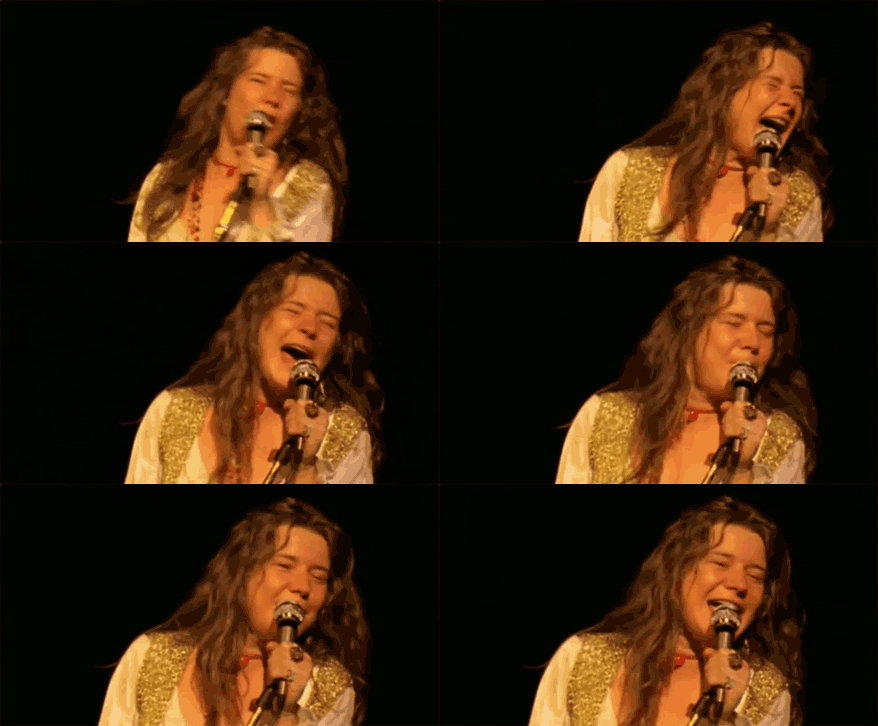
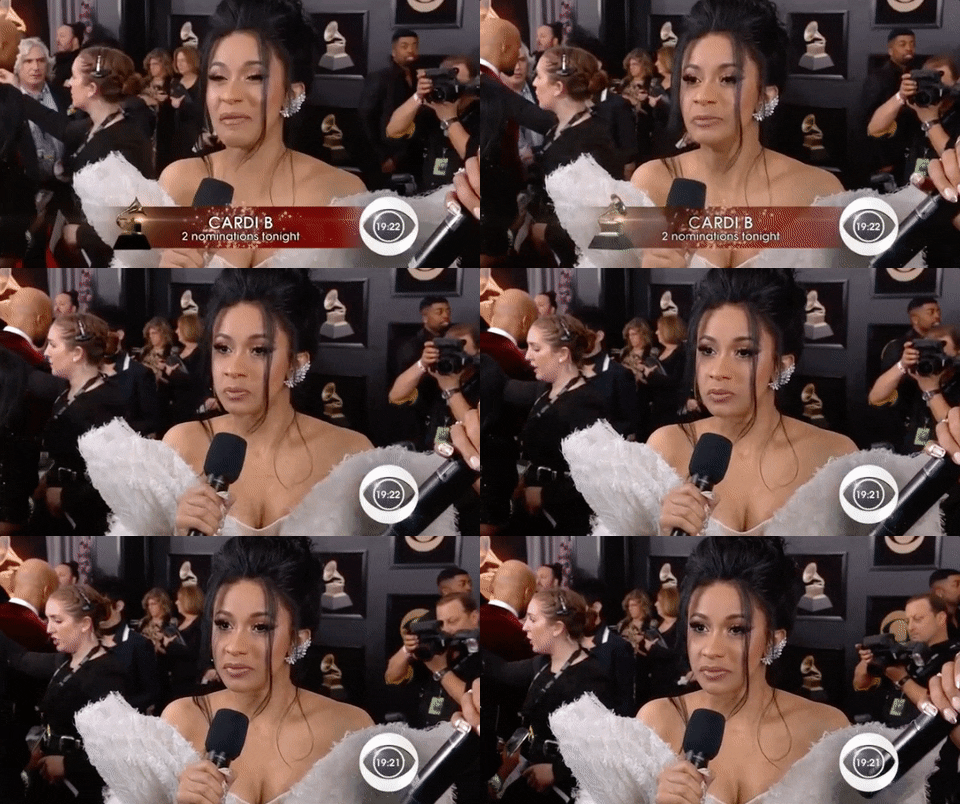
This is a very very sad reality in the music world today. According to recent studies done by the USC Annenberg Inclusion Initiative, only 22.4 percent of the biggest songs of the last six years were sung by female artists, only 12.3 percent were written by female artists and only 2 percent of those songs were produced by women (Yoo,2018). You can even see the exclusivity at the awards shows, even the Grammy’s, only 9.3 percent of the nominees from the last five years have been female and 90.7 percent of the nominees were men (Lorusso, 2018). Even last year, there was no woman that made it to number one on the Billboard Hot 100 until Taylor Swift release “Look What You Made Me Do,” in the first eight months of 2017, 14 percent of the songs in the top ten of the Billboard Hot 100 were sung by women (Lorusso, 2018). Facts are facts, this is obviously a huge issue and shows that the music world is so not inclusive.
3. Lists
Lists have their pros and cons, as well as limitations. Also, besides having a grocery list, lists are mostly lies (Powers, 2017). They imitate whispered compromises imitate unconscious biases, these lists seem important during the time the list was created but does not make any sense to future generations (Powers, 2017). Lists are also argued to be anti-feminist (Powers, 2017). Lists correlate between feminism in music because there are so many lists that have been created in the music industry that ranks the “best” mainstream musicians, but within so many of those lists, there is very little female representation (Powers, 2017). All of the mainstream lists of best songs or musicians clearly favors men (Lorusso, 2018). One of the biggest culprits of little female representation is the Rock and Roll Hall of Fame (Powers, 2017).

4. Men “Do” and Women “Be”
People see male and female musicians completely differently. People view women musicians as a fantasy, yet people see male musicians as creative geniuses. According to Powers, “the idea that men “do,” while women “be.” This distinction is at the core of the conventional gender binary. Women are linked to the natural and the timeless, while men innovate and make history. Men build civilizations and create great works, while women animate spaces and connect people with their nurturing souls and alluring energy. These associations may seem outdated, but they underpin the ways in which male or female greatness is discussed and defined, in music as in the larger culture.” Because of the idea that women artists “be” they are seen as personalities, not creators of their music (Powers, 2017).

5. Feminism has entered the mainstream.
Feminism is here and it is screaming for the world to listen. Between the Third wave of feminism and the #MeToo movement, women have had it with being silenced. It is time to speak up and support your sisters.
6. Feminism is in our everyday music.
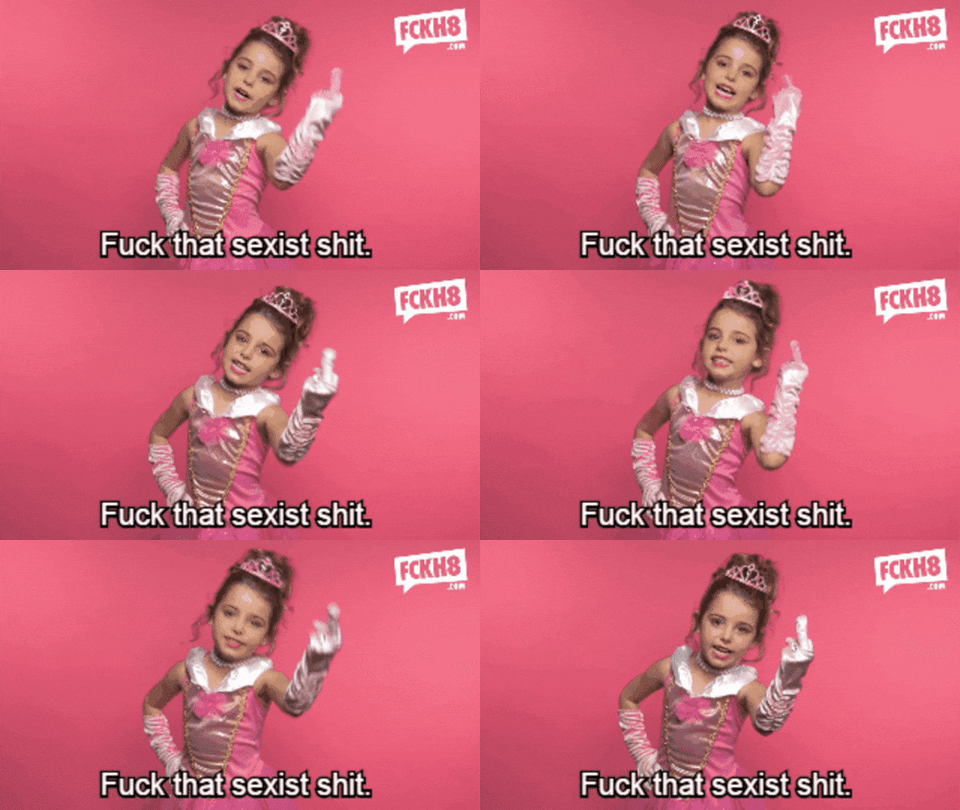
We see feminism in our everyday lives. It’s all over social media, our TV shows, our movies but especially in our music. Music is the best platform to be vocal about your beliefs in my opinion and both women and men alike are being vocal about their feminist beliefs.
7. Feminism in pop music makes girls feel independent!
So much music that is being released today makes women feel independent. Honestly, it reflects how our society is changing and how women are finding their independence. We hear so many women in music basically shouting from the rooftops that they don’t need a man to be happy. For example, Needed Me by Rihanna is one of the most independent, bad ass songs that I have heard in a while. Whenever I hear this song, I feel like such a strong independent woman who does not need a man in her life. Some radical conservatives believe that feminism makes girls believe that they don’t need to be reliant on their husbands (Valenti, 5-18), and as I said before, this song makes me feel that way and that is completely okay. The strongest lyrics in that song are, “I was good on my own that’s the way it was. But, baby, don’t get it twisted, you was just another ***** on the hit list, tryna fix your inner issues with a bad bitch…Didn’t they tell you that I was a savage? Fuck ya white and ya carriage. Bet you never could imagine never told you could have it, you needed me.” To me, feminism means being content with your individual life and knowing you don’t need a significant other to make you feel whole.
8. Women in the music industry sing about sex positivity.
I believe that sex positivity is another very good way to express feminism. In the past and even in some places today, women are looked down on for discussing their sex lives, but we are hearing so many songs about sex today by women. Sex positivity and singing about sex makes us feel sexy and confident. Rihanna and Beyonce are two perfect examples of this. Rihanna has a song called “Sex with Me,” she sings “sex with me so amazing,” and she even sings “tonight, all night, I’m Monroe, even if I’m alone.” Which is her singing about masturbation. For some reason, it is so taboo for women to discuss masturbation, but it is such a natural and normal thing for everyone to do, everyone does it.

9. Music has helped take back the term “bitch”.
Oh, the term bitch… women and the term bitch have had a love-hate relationship for years and years. Some of the worst things you could call a woman are whore, cunt, slut, or bitch. Why is it that some of the worst things you can call a man are pussy, girl, or bitch? All of these words are another term for girl. In other words, it’s the biggest insult to be called a woman (Valenti, 5-18). When we turn on the radio we’re always hearing rappers use the word bitch in practically every other sentence, (Gay, ix-xiv), have we become immune to the word? No, because women are trying to reclaim words like bitch, slut, and hoe. Young feminists are taking the power out of the derogatory words and making them for our community (Valenti, 171-187). There are so many songs out there that women have said the word bitch in the song. There is Bitch Better Have My Money by Rihanna, Bitch by Alanis Morisette, She’s a Bitch by Missy Elliott and many many more.
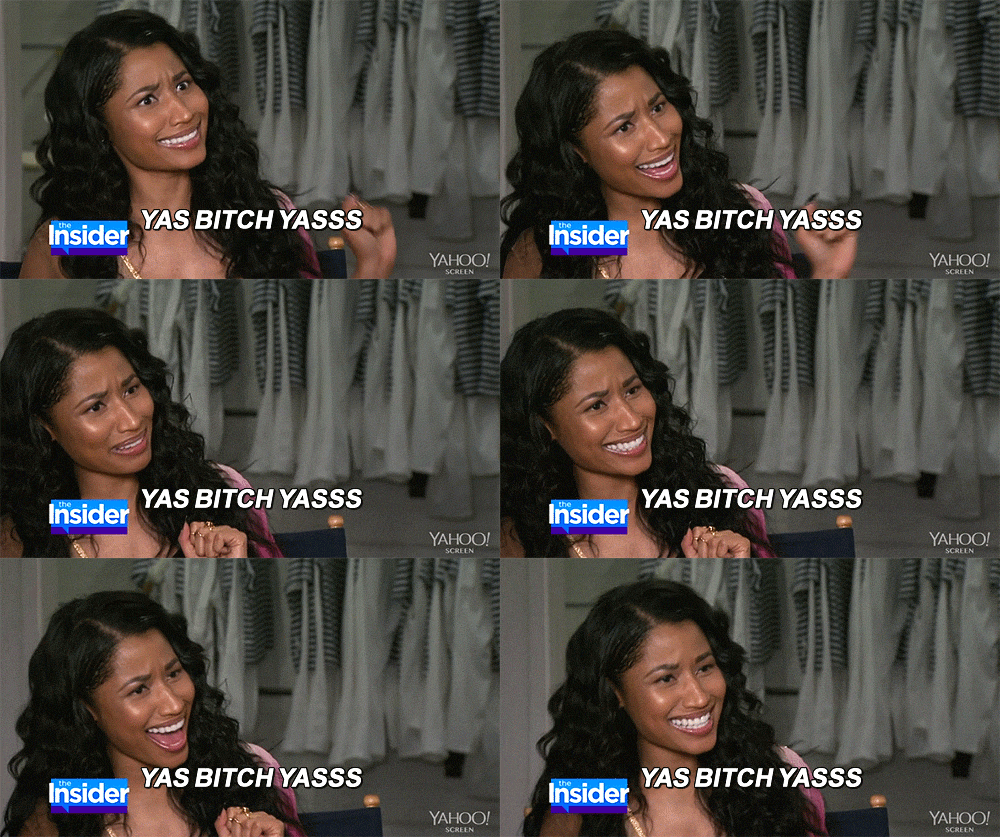
10. The music makes you feel like a boss ass bitch!
“As women we are brought up to feel like there’s something wrong with us. We’re too fat. We’re dumb. We’re too smart. We’re not ladylike enough- stop cursing, chewing with your mouth open, speaking your mind. We’re too slutty. We’re not slutty enough. You’re not too fat. You’re not too loud. You’re not too smart. You’re not unladylike. There is nothing wrong with you. I know it sounds simple, but it took me a long time to understand this. And once I did, damn, did it feel good. Why go through your life believing you’re not good enough and that you have to change?”-Valenti. This quote was my favorite quote out of all of the feminist reading because I related to it more than anything else I have read. It is so screwed up that our society makes women believe that there are things wrong with us, but the interesting possible reason behind it could be because feeling insecure and not good enough suppresses your feminism. Being a feminist is one of the biggest confidence booster, it makes you feel like you are woman, hear you roar (Valenti, 5-18). There are so many songs by women that make you feel confident and powerful. There are some feminist anthems that make every woman dance like no one is watching.
11. Girl Groups
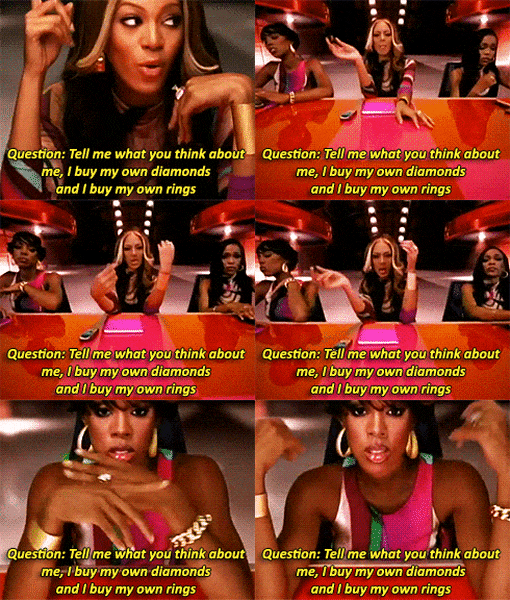
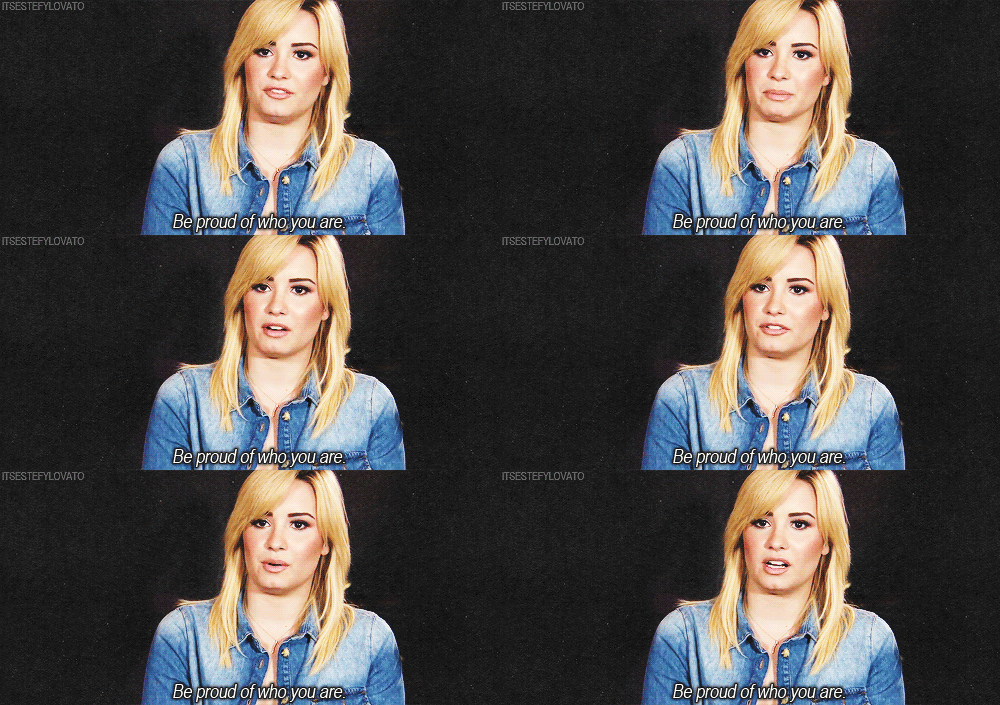
Girl groups are an icon of feminism. Girl groups have been around to help women figure out the differences between love and reliance, good and bad and freedom and being trapped (Powers, 2001). The Spice Girls endorsed playful feminism and the idea of girl power (Wald, 1998). TLC taught us what a “scrub is” and to not want a scrub. Salt-n-Peppa promoting sex positivity. En Vogue singing about how “you’re never gonna get it (my lovin’). The Dixie Chicks singing about helping a friend out of an abusive relationship. The Runaways and their rebellious angst that was rare to see at the time. Destiny’s Child making women feel ever so confident. Since hip-hop has grown, girl groups have grown stronger (Powers, 2001).
12. Girlhood
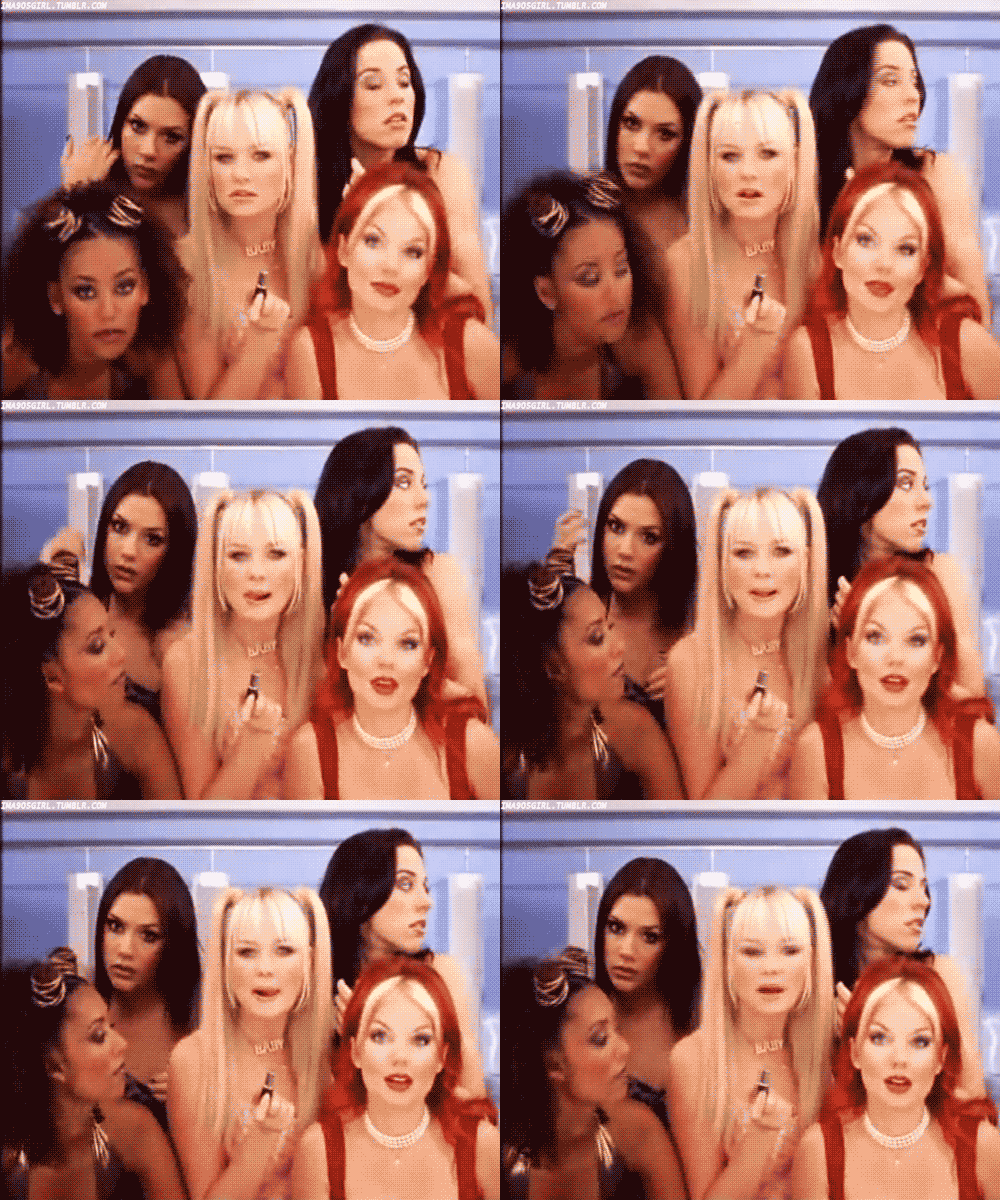
Girlhood is the more feminist movement in the rock genre (Wald, 1998). According to Wald, “Female musicians strategic performances of girlhood and their deliberate cultivation of various girlish identities in their music, style, and stage acts. The performance of girlhood by contemporary female rockers encompasses a wide range of musical and artistic practices by women within, outside of, and on the margins of the corporate mainstream” Girlhood is seen among female rockers like Gwen Stefani, Alanis Morisette, the Runaways and Paramore lead sing Hailey Williams. These artists celebrate girlhood to encourage girl youth subculture and making stories that upset the patriarchal society (Wald, 1998).
13. Trans Women in Music
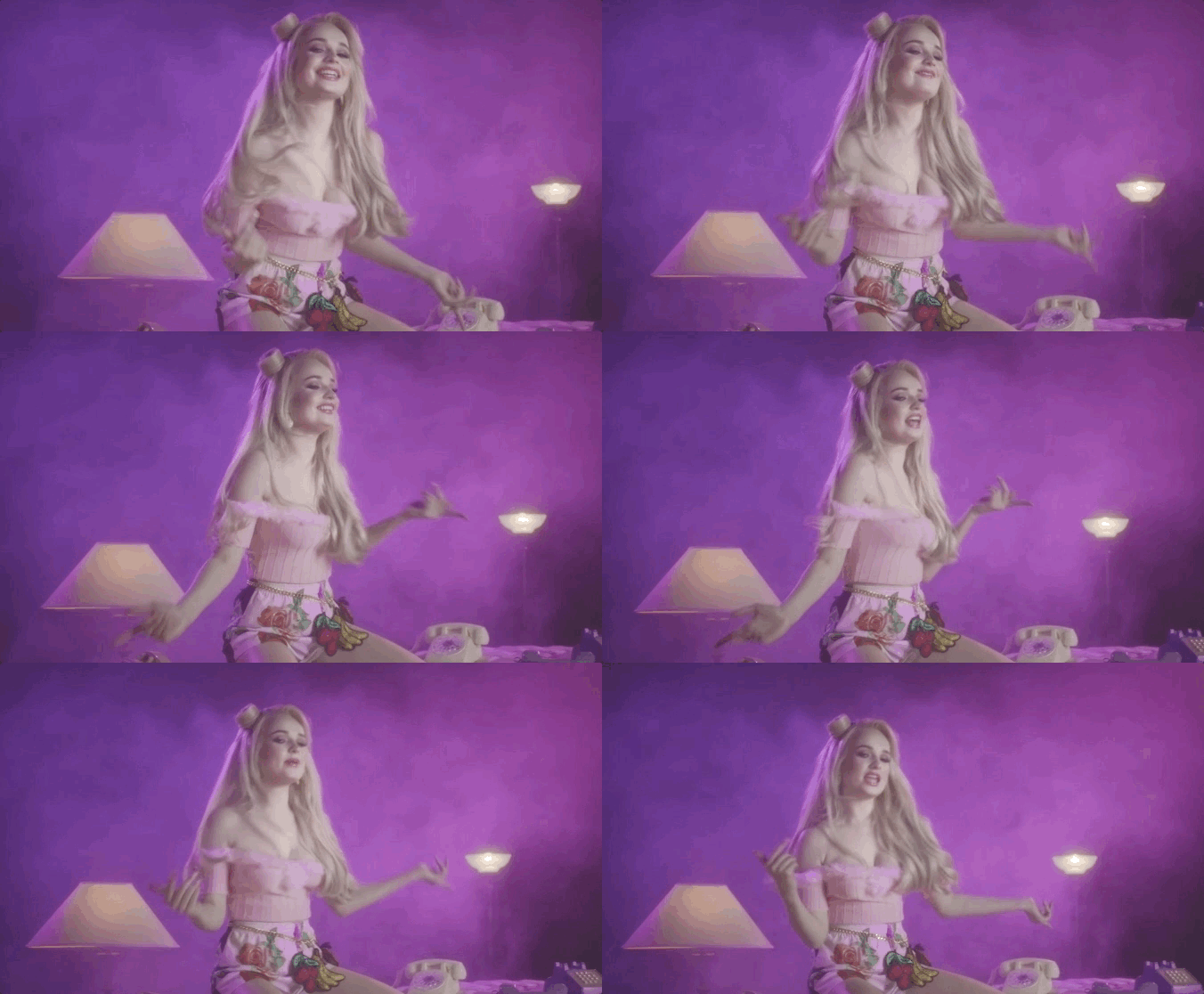
Trans women and gender non-conforming people are, sadly, often left out of the feminism talk, although they are also victims of the male-controlled burdens (Pitchfork, 2017). Although, in the music industry there are some amazing trans artists! Some trans musicians include Kim Petras, Shea Diamond, Anohni and Ah-Mer-Ah-Su. Trans people, in general, are barely recognized in the music industry.
14. Feminist Allies in the Music Industry
People believe that feminists are anti-male, but feminists just want men to be our allies (Bell Hooks). Luckily, we have some male allies in the music industry. The famed 90’s rock and roller, Kurt Cobain was also an active voice for women, specifically speaking out against assault. The song, Polly by Nirvana is about the rape of a woman (Miller, 2014). Kurt hated getting media attention, but he often spoke about assault when he spoke to the press (Miller, 2014) Cobain said, “Rape is one of the most terrible crimes on earth. And it happens every few minutes. The problem with groups who deal with rape is that they try to educate women about how to defend themselves. What really needs to be done is teaching men not to rape. Go to the source and start there.” John Legend, John Legend has spoken out saying that he is a feminist. He goes to benefits that are for women’s rights. He has been quoted saying “All men should be feminists. If men care about women’s right the world will be a better place.” (Miller, 2014). John Legend is also part of a male feminist group called Makers Men (Weiss, 2017). Harry Styles is very vocal about his feminist views. He has been seen out wear a shirt that says “we should all be feminists,” he actively donates to Planned Parenthood, he has even said in an interview that “gender equality does not seem political to him but it is a fundamental right.” (Harwood, 2017). These are just a few examples of some important female allies. Other male musician allies include David Bowie, Tupac, Beastie Boys, Eddie Vedder, and John Lennon. Looking at this list, it is kind of sad that a lot of these musicians have passed away.

15. Women Feminist Musicians
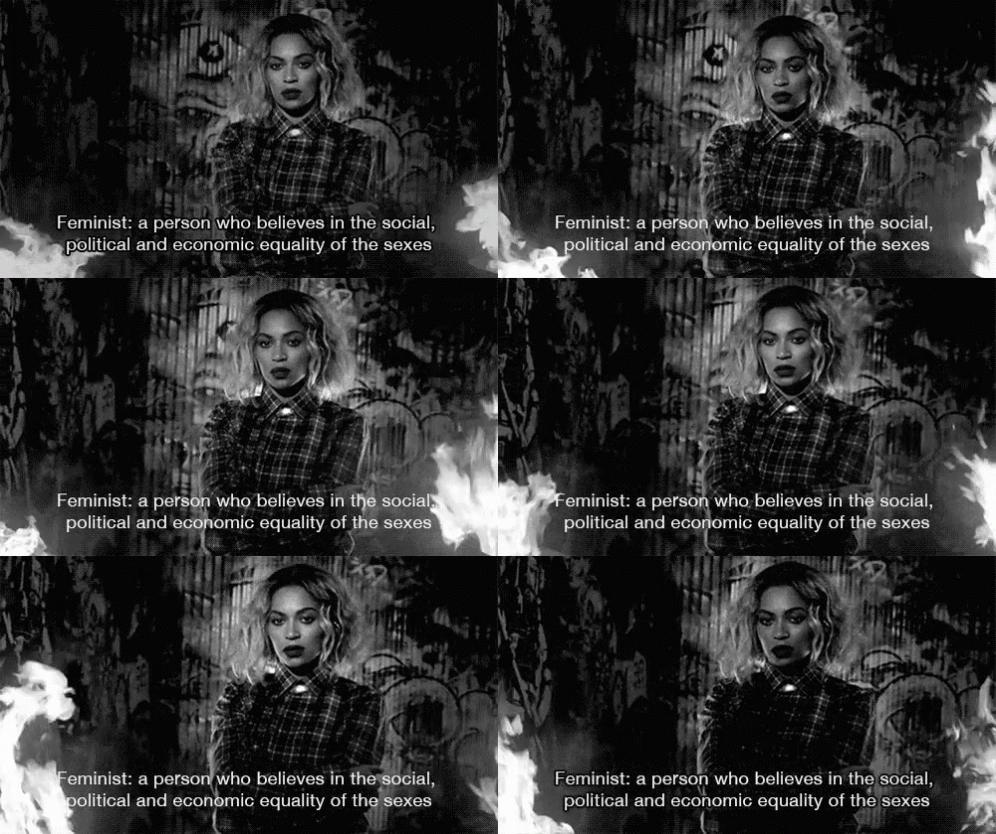
Musicians take part in feminism in their own ways- they either talk about their personal experience or they are even more vocal about it and raise awareness (Pitchfork, 2017). Beyoncé has so many songs about being a feminist, especially ***Flawless, where she uses apart from a TED talk by Chimamanda Ngozi Adichie called “We Should All Be Feminists.” “I’ve always considered myself a feminist, although I was always afraid of that word because people put so much on it. When honestly, it’s very simple. It’s just a person that believes in equality for men and women. Men and women balance each other out, and we have to get to a point where we are comfortable with appreciating each other.”- Beyonce (Hare, 2014). Rihanna attended the women’s march. Rihanna has always challenged female power and sexuality (Blais-Billie, 2017). She wears many fashion choices that are vocal about her feminism (Blais-Billie, 2017). Ariana Grande has been more vocal about her feminism lately. She recently tweeted to someone being anti-feminist saying “I use my talent AND my sexuality all the time because I choose to. women can be sexual AND talented. naked and dignified. it’s OUR choice. & we will keep fighting til people understand. I say this wall due respect but thank u, next.”
References:
Bell hooks, “Consciousness-Raising: A Constant Change of Heart,” Feminism is for
Everybody,7-12.
Blais-Billie, B (2017). Five Times Rihanna’s Style Was Unapologetically Feminist. Billboard. Retrieved from: https://www.billboard.com/articles/news/lifestyle/7662730/rihanna-style-feminist
Hare, Breeanna (2014). Beyoncé opens up on feminism, fame marriage. CNN. Retrieved from: http://www.cnn.com/2014/12/12/showbiz/music/beyonce-feminism-yours-and-mine-video/index.html
Harwood, E (2017). Harry Styles Also Loves Wearing Feminist T-Shirts. Vanity Fair. Retrieved from: https://www.vanityfair.com/style/2017/06/harry-styles-women-are-smarter-shirt
Lorusso, M (2018). Women are the Fabric of 21st Century Pop. National Public Radio. Retrieved from: https://www.npr.org/2018/07/30/633437514/women-are-the-fabric-of-21st-century-pop
Miller, J (2014). 8 Feminist Male Musicians We Love. Refinery 29. Retrieved from: https://www.refinery29.com/en-us/feminist-male-musicians
Pitchfork (2017). When Feminism Meets Music. Pitchfork. Retrieved from: https://pitchfork.com/thepitch/when-feminism-meets-music-great-songs-that-sample-radical-speech/
Powers, A (2001). Music; In Tune With the New Feminism. New York Times. Retrieved from: https://www.nytimes.com/2001/04/29/arts/music-in-tune-with-the-new-feminism.html
Powers, A (2017). A New Canon: In Pop Music, Women Belong At The Center Of The Story.
National Public Radio. Retrieved from: https://www.npr.org/2017/07/24/538601651/a-new-canon-in-pop-music-women-belong-at-the-center-of-the-story
Valenti, Full Frontal Feminism, 171-187
Valenti, Full Frontal Feminism, 5-18
Wald, G. (1998). Just a Girl? Rock Music, Feminism, and the Cultural Construction of Female Youth. Signs, 23(3), 585-610. Retrieved from http://www.jstor.org.ezproxy.uky.edu/stable/3175302
Weiss, S. (2017). John Legend Isn’t Just A Feminist Because Of Baby Luna. Refinery 29. Retrieved from: https://www.refinery29.com/en-us/2017/08/169556/john-legend-feminist-dad
Yoo, N (2018). Women Are Staggeringly Underrepresented in Pop Music, New Study Shows. Pitchfork. Retrieved from: https://pitchfork.com/news/women-are-staggeringly-underrepresented-in-pop-music-new-study-shows/

 Feminism in Music Industry